
 25 March, 2026
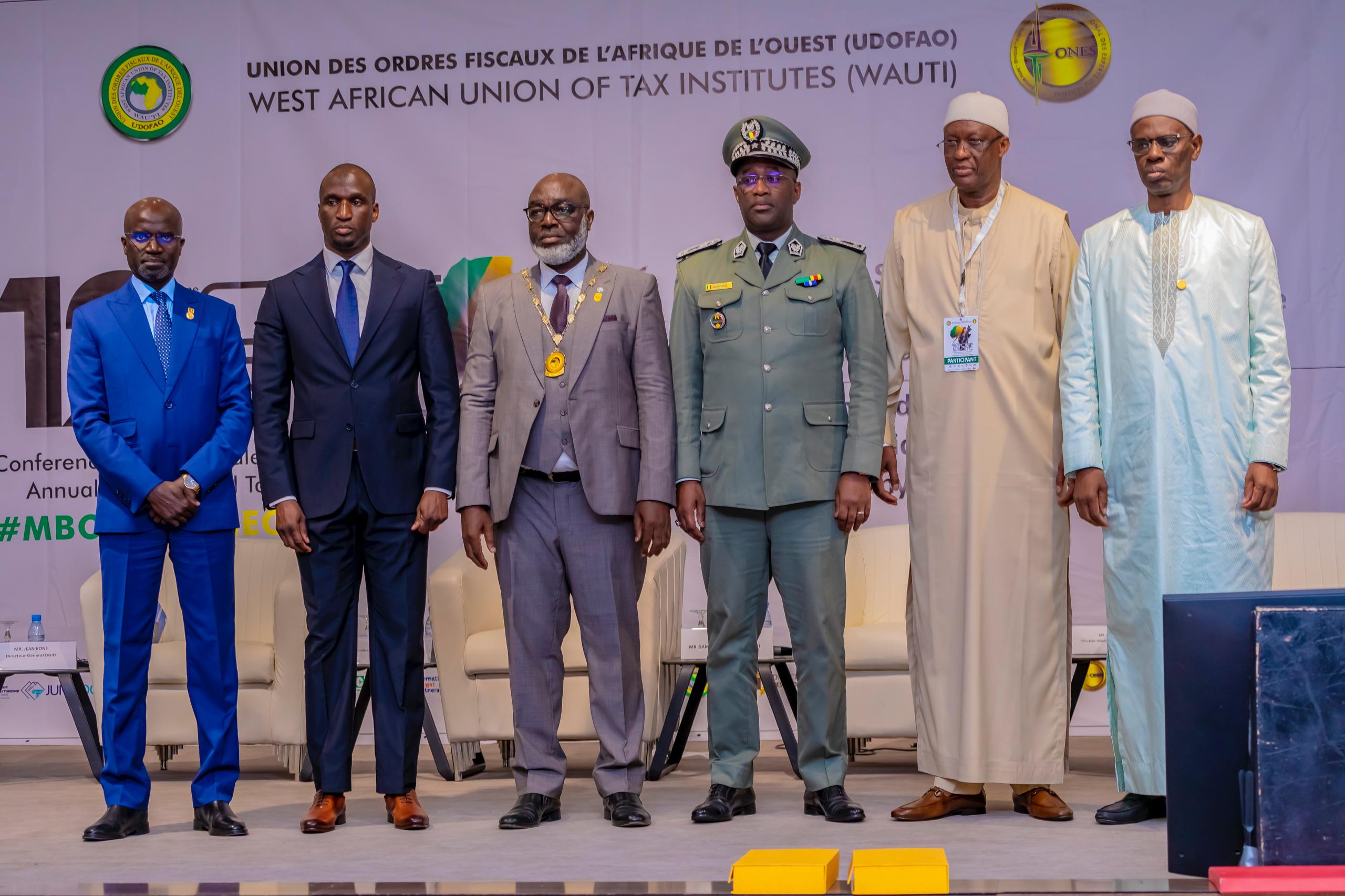
Commissioner General and Delegation Attends 12th West African Union of Tax Institute (WAUTI) Annual Conference in Mbour, Senegal.
Members of his delegation were Mr. Essa Jallow Deputy Commissioner General and Head of Domestic Taxes, Mr. Yahya Manneh Director Technical Services Department, Mr. Ebrima Sallah Deputy Director Legal, Mrs Mariama Jobe Senior Tax Officer and Country Rep Society of Women in Taxation (SWIT) Gambia chapter, and Mr. Malayn Sanneh Communication Sub Officer II and other Sub Officers that accompany the delegation.
The Commissioner General delivered a goodwill message on behalf of the Gambia Revenue Authority and the Government of the Republic of The Gambia.
In his goodwill massage, he commended WAUTI for sustaining this important platform over the years. For twelve consecutive conferences, WAUTI has provided a professional and intellectual forum where tax administrators, policymakers, academics, and practitioners come together to shape the fiscal future of the region. This consistency reflects vision, resilience, and a strong commitment to advancing taxation in West Africa.
This year’s theme, “Taxation and Economic Sovereignty in West Africa: Harmonizing Fiscal Autonomy for Inclusive Growth,” is both timely and relevant. Economic sovereignty, at its core, is a nation’s ability to determine its development path through independent and sustainable financing. Taxation remains the most legitimate, reliable, and sustainable means of achieving this. It reduces dependency, strengthens accountability between governments and citizens, and reinforces the social contract.
Commissioner General Darboe noted that many countries in the region have long relied on external support to finance development priorities. However, there is growing concern about what is often referred to as “donor fatigue.” The current global economic climate has made development assistance more limited and uncertain.
He also highlighted the rising debt burden across the continent. In several African countries, data shows that up to 60% of government revenue is spent on debt servicing. This raises an important concern: what remains for investment in critical sectors such as health, education, and infrastructure?
Mr. Darboe urged African countries to look inward and rely more on home-grown solutions. Development, he stressed, cannot be outsourced. It must be driven by strong local institutions, resilient economies, and effective fiscal systems.
He further emphasized the need for greater cooperation through knowledge sharing, professional development, and stronger tax administration systems. Improving compliance, enhancing transparency, and increasing the effectiveness of domestic resource mobilization across the region are key priorities.
Beyond institutional reforms, he stressed the importance of changing how taxation is viewed. Taxation should not be seen only as an obligation placed on citizens and businesses, but as a shared investment in nation-building. When properly managed, tax revenue translates into roads that connect communities, hospitals that save lives, schools that educate children, and infrastructure that supports economic growth.
In attendance were participants from The Gambia, Senegal, Togo, Benin, Nigeria Ghana, Mali, Niger, Ivory Coast, Burkina Faso and Liberia.