
 19 November, 2026
Delegation Examines Digital Revenue Monitoring, Forensic Tax Stamp Verification, Fuel Testing and AI-assisted Market Intelligence Systems.
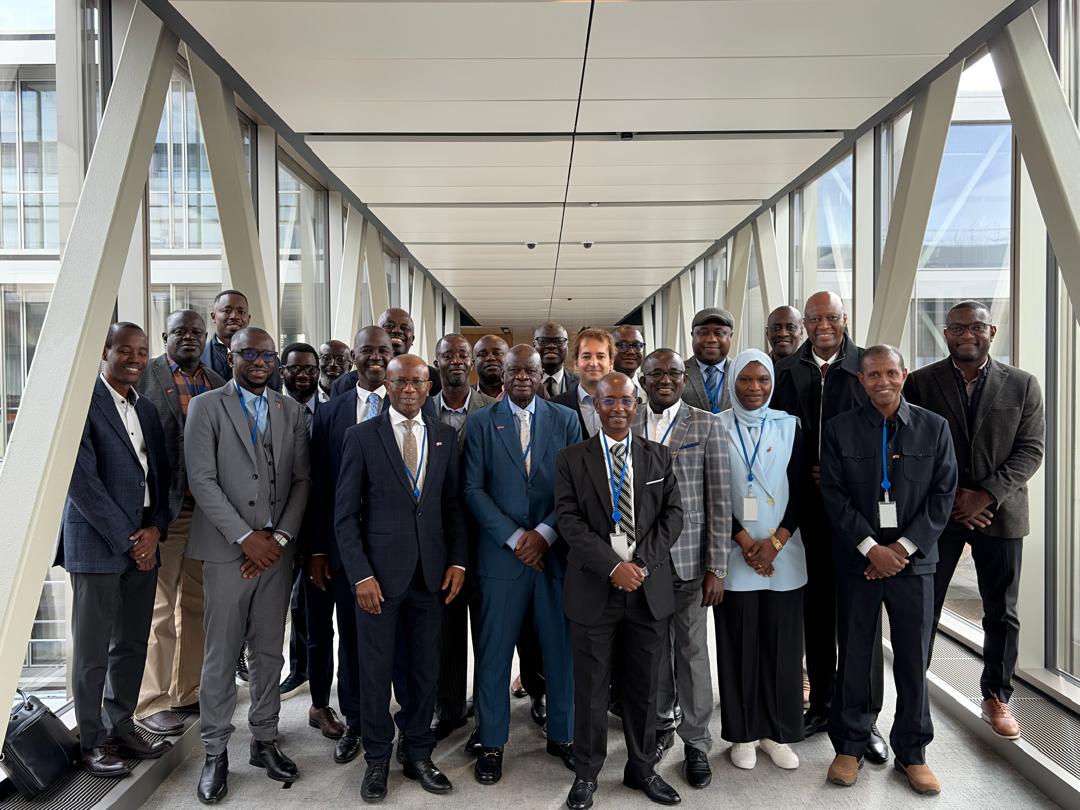
A high-level delegation from the Gambia Revenue Authority (GRA) and key government institutions has concluded a week-long study tour of SICPA's facilities in Switzerland, exploring advanced digital technologies and revenue monitoring systems aimed at strengthening domestic revenue mobilisation, improving regulatory compliance and addressing revenue leakages.
The delegation, which visited SICPA from 16 to 20 November 2026, comprised representatives from the Ministry of Finance and Economic Affairs, the Central Bank of The Gambia, the Public Utilities Regulatory Authority and The Gambia ICT Agency, among other stakeholders.
The visit forms part of the Government's broader efforts to modernise revenue administration through digital transformation, institutional reforms and strategic partnerships.
In February 2023, the Government of The Gambia signed a concession agreement with SICPA, a Swiss-based technology and security company, for the implementation of Digital Tax Stamps, a Telecommunication Service Monitoring System and a Refined Fuel Marking Solution. The interventions are designed to strengthen revenue collection, improve regulatory oversight, combat illicit trade and minimise revenue leakages.
Focus on FinTech and Digital Revenue Monitoring
One of the major areas of engagement was Financial Technology (FinTech) integration, particularly the onboarding of major mobile-money operators in collaboration with the Central Bank of The Gambia. Discussions explored how digital financial transactions could be better integrated into the country's revenue monitoring framework.
The delegation also examined proposals for customised digital dashboards to support executive decision-making, analytical reporting and technical monitoring within the GRA. The proposed systems are expected to facilitate near-real-time revenue monitoring, improve reporting efficiency and strengthen institutional accountability through secure data management and role-based access.
Strengthening Tax Stamp Authentication
The delegation was also introduced to advanced forensic authentication techniques used to distinguish genuine tax stamps from counterfeit ones.
SICPA experts demonstrated various security features, including colour-shifting inks, micro-printing, polarisation filters and digital identification codes. The demonstration highlighted the importance of specialised forensic examination in verifying suspected counterfeit stamps, noting that preliminary indicators alone are insufficient to establish counterfeiting.
Fuel Testing Laboratory and Quality Assurance
Another major component of the study tour was a technical visit to a fuel testing laboratory, where the delegation examined laboratory infrastructure, specialised equipment and operational safety standards.
Particular attention was given to fire protection systems, ventilation, chemical storage, waste management and laboratory testing equipment. The delegation emphasised the importance of ensuring that the proposed fuel testing laboratory at the Gambia Standards Bureau meets the necessary technical, operational and safety requirements before commissioning.
The facility is expected to strengthen national capacity to monitor petroleum product quality, support regulatory enforcement and protect consumers and the wider economy.
AI-Assisted Technology for Fuel Market Surveillance
The delegation also received a presentation on SICPA's Digital Market Intelligence (DMI) platform, an artificial intelligence-assisted system designed to enhance fuel monitoring, market surveillance and regulatory enforcement.
The platform integrates information from fuel marking, laboratory testing, field inspections and location data, alongside other authorised information sources, to identify unusual patterns, assess potential risks and support targeted regulatory inspections.
Through automated alerts and digital case management, the system can flag potential irregularities such as discrepancies in fuel marker dosage, unusual testing patterns, missed inspection activities and inconsistencies between fuel tank and pump measurements.
However, SICPA clarified that these indicators serve as risk-assessment tools to guide further investigation and do not, in themselves, constitute proof of wrongdoing. The delegation was further informed that the DMI platform and its digital stock-management functionality have not yet been deployed in The Gambia.
Strengthening the Partnership
The study tour provided the Gambian delegation with valuable exposure to international best practices in digital revenue administration, forensic verification, fuel integrity monitoring and technology-driven regulatory enforcement.
It also underscored the importance of institutional capacity, cybersecurity, effective data governance and sustained skills transfer in ensuring the successful implementation and long-term sustainability of digital solutions.
SICPA, which has a history spanning 99 years and employs more than 3,000 people worldwide, reaffirmed its commitment to the partnership with The Gambia. Both parties expressed appreciation for the progress achieved and their willingness to explore additional areas of mutual cooperation.
The partnership has already attracted interest from other revenue administrations in the sub-region. The GRA has hosted study visits by regional counterparts seeking to learn from The Gambia's experience in applying technology to improve revenue administration and strengthen domestic resource mobilisation.
The Switzerland study tour therefore represents an important opportunity for the GRA and its institutional partners to assess emerging technologies, strengthen technical knowledge and identify practical approaches to further modernising the country's revenue administration system.
Ultimately, the GRA's continued investment in digital transformation and strategic partnerships is aimed at protecting the national revenue base, promoting regulatory compliance and building a more efficient, transparent and sustainable revenue administration system in support of The Gambia's national development agenda.